The Four Horsemen of the Modern-Day Apocalypse: What I Check Before a Tomatis® Intensive
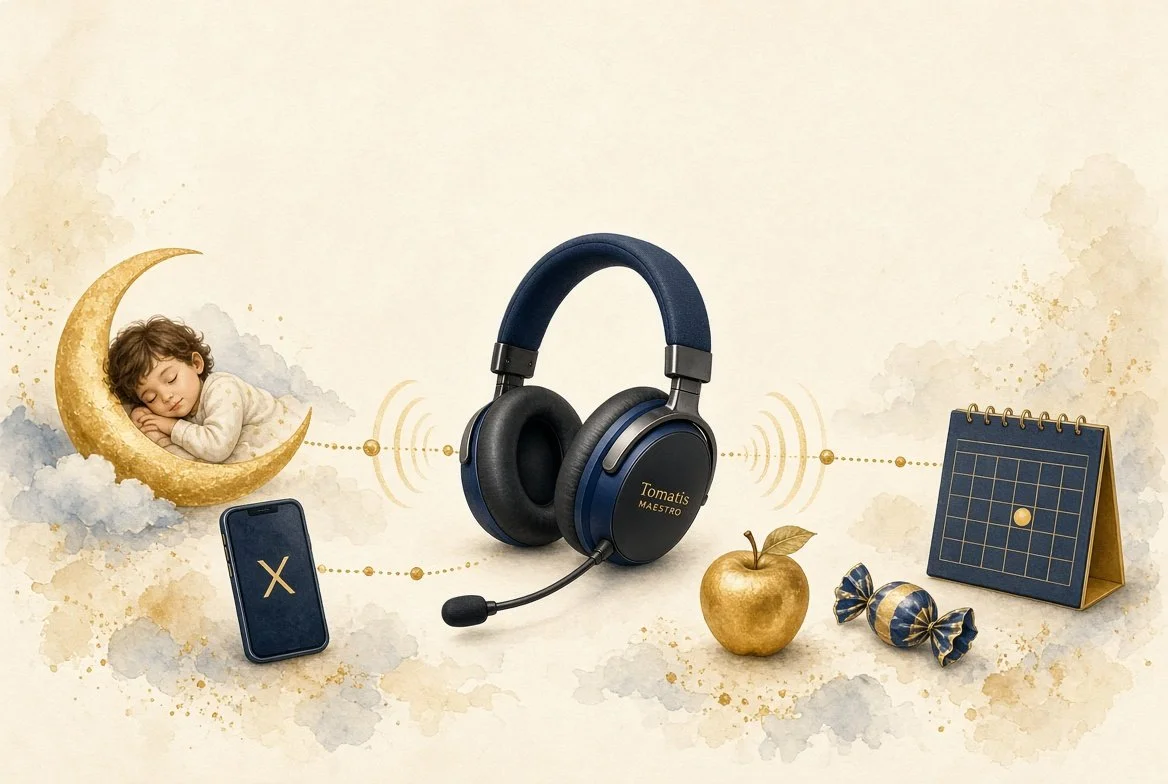
These 4 things have a major impact
When a family sits down with me about a Tomatis® Intensive, I do not start with the headphones. I start with four things I have come to call
The Four Horsemen of the Modern-Day Apocalypse:
Sleep. Screens. Sugar. Schedules.
That name is a little dramatic on purpose. These four are not villains, and they are not a report card on anyone’s parenting.
They are the everyday forces that quietly decide whether a person can actually listen. I am a parent, a teacher’s aide, and a Level 2 Tomatis® Practitioner. I have used this method with my own family. I have also watched, from the back of a classroom, how a tired, overstimulated, underfueled, overscheduled nervous system can look like “not paying attention.”
So before we talk Maestro headphones, I check in on the life around the ears.I am not here to sell.
I am here first to listen, understand, then advise.

This is what the Four Horsemen look like when they are running the house.
Horseman 1: Sleep
A tired brain cannot stay in the listening position. Poor sleep often looks like something else entirely: big emotions, hard mornings, fidgeting, irritability, “selective hearing,” or a child who seems wired at 8 a.m. and spent by 10. When I meet a family, I ask simple questions:
What time do they actually fall asleep—not the time lights are supposed to be out?
Is bedtime more or less the same most nights?
Are screens still on in the last hour?
How is waking up?
I am not looking for a perfect household. I am looking for the gap between the sleep a growing brain needs and the sleep it is getting. Rest is the foundation everything else sits on. Better sleep makes better listening possible. In some homes we also talk about screen-free wind-down and tools like bone-conduction sound at bedtime—not as magic, but as support for a nervous system that has forgotten how to settle.
Horseman 2: Screens
Screens overfeed the eyes and underfeed the ears. They are very good at what they are built to do: deliver fast novelty and quick reward. That trains the brain for the next swipe, not for sustained listening to a voice, a lesson, or a piece of music.
I ask:
When do screens start and stop in a typical day?
Are they in the bedroom?
What happens at the transition when the device turns off?
An hour of a Tomatis® Intensive is also an hour away from a screen. That is not an accident. Sessions become a screen-free zone on purpose. The ear gets a workout. The visual reward system gets a rest. We cannot retrain listening while the nervous system is still hooked on constant visual novelty—and then wonder why a child cannot lock onto a conversation or a classroom lesson.
If this one feels especially loud in your house, I wrote more here: How The Tomatis® Method Helps Kids (and Parents) Overcome Screen Time Overload.
Horseman 3: Sugar
This is not about perfect eating. It is about stable fuel. The brain runs on a steady supply of energy. When blood sugar spikes and then drops, listening often goes with it. A crash can look like inattention, irritability, or “they hear me when they want to.”
I ask:
What does breakfast actually look like on a school morning?
Are carbohydrates being paired with protein and fat?
Does the afternoon slump arrive right when school—or homework—gets hard?
I am not handing anyone a meal plan. I am noticing whether the body has enough steady fuel to stay available. Sometimes the most useful change before an intensive is not a new program. It is eggs instead of only cereal, or a snack that does not send anyone off a cliff at 2 p.m.
Horseman 4: Schedules
Listening needs margin. A packed calendar leaves little room for the nervous system to settle. It also leaves little room for the practical heart of an intensive: about one hour a day, for a stretch of days, with enough consistency for the brain to do the work.
I ask:
Where is the quiet space in the week?
Are transitions rushed from the moment everyone wakes up?
Can this family—or this classroom—protect those listening days, or do we need to clear the runway first?
A full schedule is not a moral failing. It is information. If the hour does not exist yet, we plan for that before we load a program into the headphones.
Why I check these before an intensive:
A Tomatis® Intensive works with the ear, the brain, the body, and the emotions. Sleep, screens, sugar, and schedules tell me how ready that system is. Sometimes we start the listening program and gently shift these four alongside it.
Sometimes we steady one horseman first so the intensive has somewhere to land.
Sometimes a parent realizes they need their own program too—because they are living inside the same four forces.
None of that is a closed door. If these four feel loud in your home, you are not failing. You are noticing the real landscape. That is the most useful place to begin.

This is what we are aiming for - screens are not eliminated, but limited and total off during the listening session.
A note for educators
I work in an elementary school. I see the same four horsemen in the classroom.
Sleep-deprived students who cannot hold a listening posture.
Devices that train novelty, then a lesson that asks for twenty minutes of quiet focus.
A mid-morning crash that looks like a behavior plan.
A master schedule with no margin for the nervous system—or for a protected listening hour. Tomatis® not one more program piled onto an already full day. It is ear-and-brain work that needs a ready nervous system. When a school asks me about it, I start here too.
If you want to look at this together, the first step is still a conversation. Book a free consultation.
Before we meet, you will complete the Tomatis® Evaluation Questionnaire. Then we sit down, I listen, and we decide together whether a Tomatis® Intensive is the right next step—for a child, a parent, or a classroom. I am here first and foremost to listen, understand, then advise. If it’s a fit, then after that -
It’s only upwards from here!
And if you’ve gotten this far, thanks for paying attention and listening.
Mary Clare Florentin
The Listening Lab – St. Louis
www.listeninglabstl.com